
What to Do After Fire and Smoke Damage: Cleanup and Restoration
Learn the essential steps after a fire, including property securing, soot cleanup, smoke odor treatment, contents cleaning, and structural restoration.
Quick answer
After firefighters and local authorities declare the property safe, prioritize documentation, temporary security, and professional assessment. Avoid disturbing soot or using household cleaners, because improper cleaning can spread residue and damage surfaces. A qualified restoration contractor can help secure the structure, evaluate smoke and fire damage, clean affected materials, address odors, and coordinate repairs. For emergency help in Los Angeles, Woodland Hills, and throughout Southern California, contact Save Pro Restoration at [1 (800) 209-6009](/contact).
Make Safety the First Priority
Do not enter a fire-damaged property until the fire department or other responsible authorities say it is safe. Hidden structural damage, unstable materials, electrical hazards, ash, and contaminated water can create risks even after flames are extinguished. Avoid turning utilities back on unless they have been inspected and cleared.
Once access is permitted, photograph visible damage from a safe location and contact your insurance carrier. A professional assessment can identify affected rooms, contents, building materials, ventilation areas, and potential secondary damage. See our fire and smoke damage restoration services to learn how the evaluation and cleanup process can begin.
Secure the Property to Limit Further Damage
A fire-damaged building may be exposed to rain, wind, animals, or unauthorized entry. Depending on the condition of the structure, temporary measures can include board-up services, roof or window protection, controlled access, and temporary covering of openings. These measures should be performed only when they can be completed safely and without disturbing unstable areas.
Save important documents, medications, pets, and undamaged personal items if authorities and the restoration team confirm that removal is safe. For service information in Los Angeles and Woodland Hills, contact the restoration team for next-step guidance.
Avoid Spreading Soot During Cleanup
Soot and smoke residue can settle on walls, ceilings, flooring, contents, and HVAC components. Dry wiping or applying the wrong household cleaner may spread residue, drive it into porous materials, or cause additional staining. Do not use fans or operate HVAC equipment if doing so could circulate contaminated particles through unaffected areas.
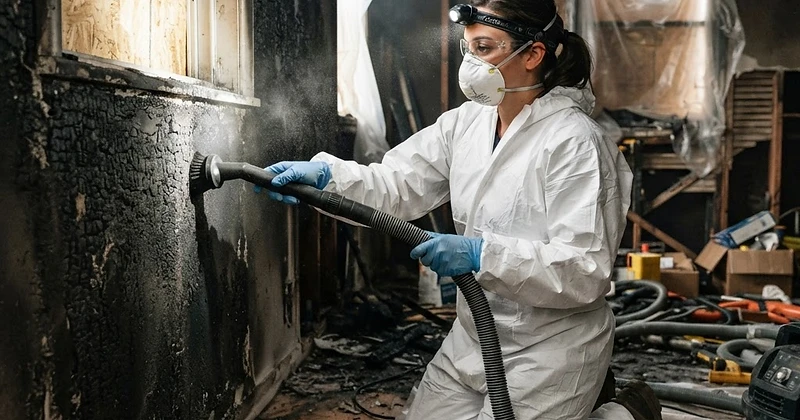
Professional cleaning methods are selected according to the material and type of residue. Technicians may use controlled HEPA-filtered vacuuming, dry-cleaning sponges, appropriate detergents, and other specialized methods. Porous contents, electronics, textiles, and finished surfaces may require different handling, so an item-by-item assessment is important. Our guide to repair and reconstruction after property damage explains how cleaning and building repairs fit into the larger recovery process.
Treat Smoke Odor at Its Source
Smoke odor can remain in porous materials, wall cavities, insulation, contents, and air-handling components after visible soot has been removed. Air fresheners generally mask odors rather than remove the materials causing them.
Effective odor control typically begins with source removal and cleaning. Depending on the affected materials and the condition of the property, professionals may use ventilation, sealing, specialized cleaning agents, or odor-treatment equipment. Some treatments require the area to be unoccupied and carefully controlled, so equipment should not be operated by occupants without professional direction. The goal is to address embedded smoke residue safely rather than simply cover the smell.
Restore Building Materials and Contents
After cleanup and drying are complete, restoration may include removing unsalvageable materials, cleaning or sealing surfaces, replacing damaged drywall and insulation, repairing flooring, treating subfloors, repainting, and restoring electrical or mechanical components through appropriately qualified professionals. Contents may also require specialized cleaning, deodorization, or off-site processing.
The scope depends on the fire, heat, smoke, water used during firefighting, and the condition of the building. Keep records of damaged items, cleanup expenses, communications, and temporary housing or business-related costs for your insurer. Coverage and claim procedures vary by policy, so confirm benefits directly with your insurance provider. Save Pro Restoration serves both residential and commercial properties and can help organize the restoration scope after the initial assessment.
Frequently asked questions
Is it safe to clean soot off my belongings myself?
It is safer to wait for a professional assessment, especially when soot has affected porous materials, electronics, textiles, food, or HVAC equipment. Dry wiping and unsuitable household cleaners can spread residue or damage surfaces. Do not handle items that may be structurally unsafe or contaminated by fire debris without appropriate guidance.
How long does smoke odor removal take?
The timeline varies with the fire's severity, the materials affected, ventilation, and the amount of source removal required. Odor treatment is usually part of a broader process that includes cleaning, removing damaged materials, and addressing hidden or porous surfaces. A restoration professional can provide a more specific estimate after inspecting the property.
Will insurance cover fire and smoke damage restoration?
Coverage depends on the policy, cause of loss, exclusions, limits, and the insurer's claim decision. Notify your insurance carrier promptly, document damage before discarding property when safe, and keep receipts and photographs. Ask the carrier which emergency services and restoration expenses are covered.
Should I use an ozone machine to remove smoke odor?
Do not use ozone-generating equipment in an occupied space or as a do-it-yourself shortcut. Odor treatment must account for occupants, pets, materials, ventilation, and the source of the odor. A qualified restoration professional can determine whether specialized equipment is appropriate and how the area must be controlled.
Sources and further reading
- EPA: Smoke and Fire Damage Restoration
- NIOSH: Protecting Yourself from Home Fire Cleanup Hazards